


A College of Letters Masterclass – Spring 2026
A College of Letters Masterclass – Spring 2026
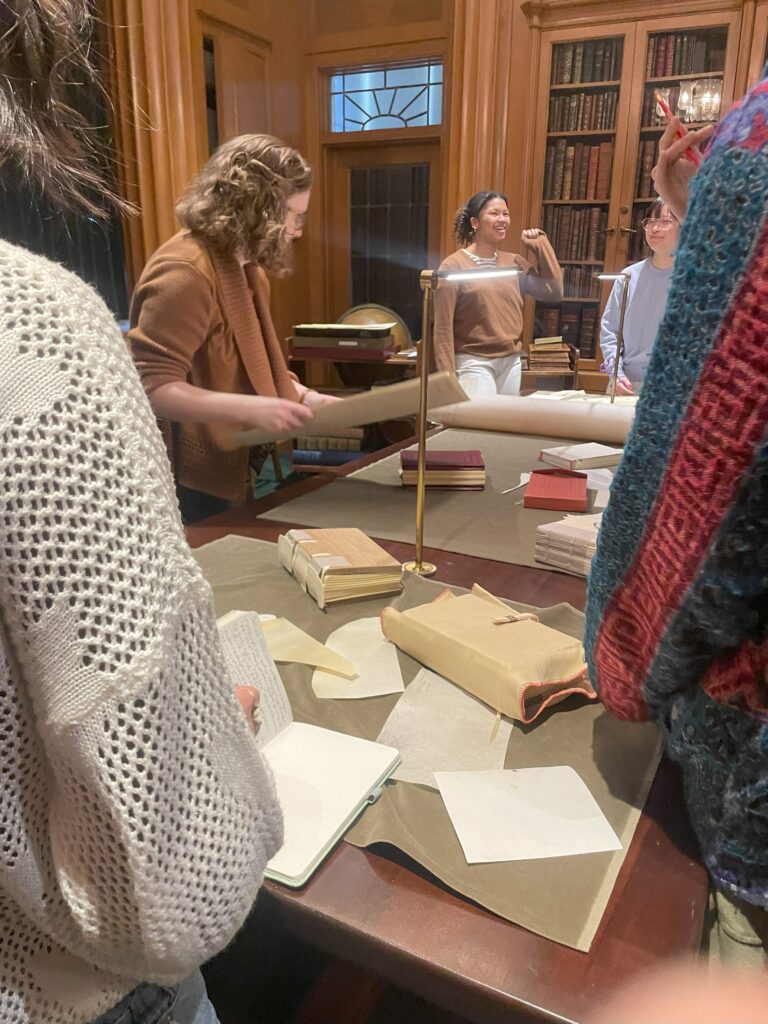
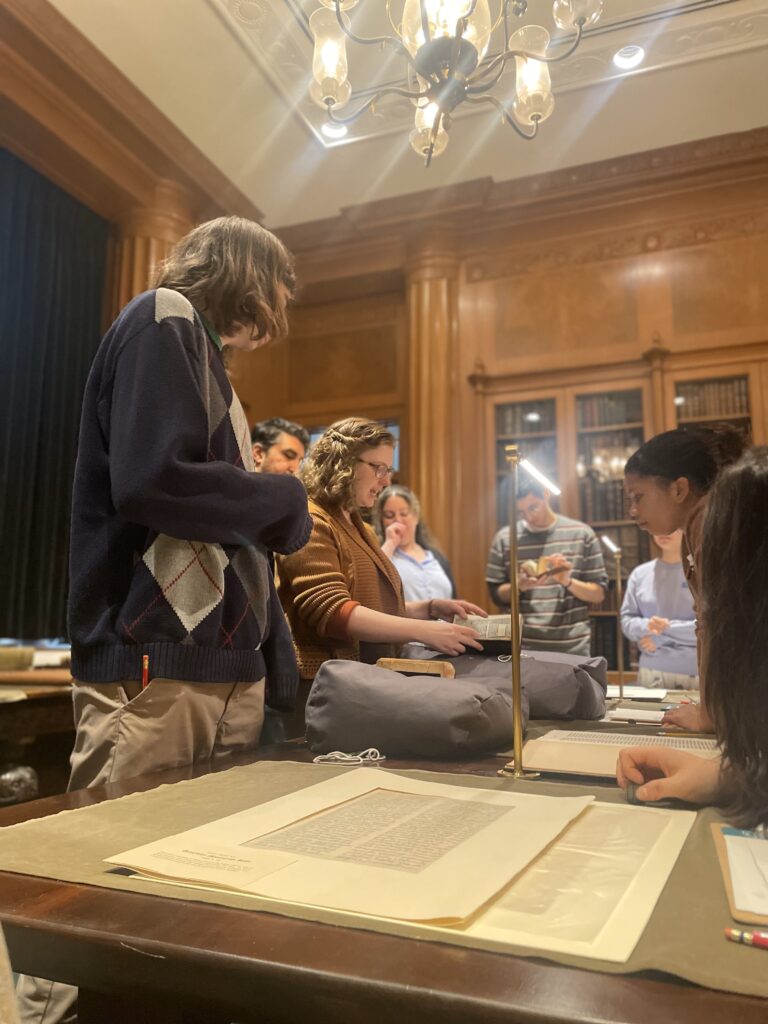
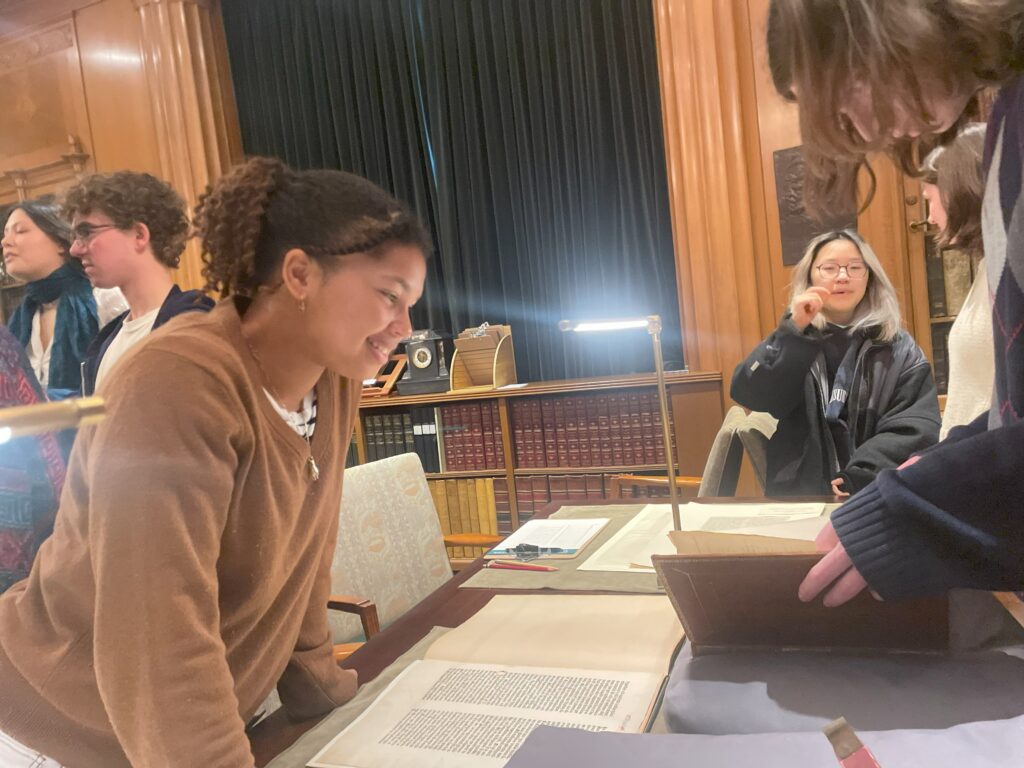
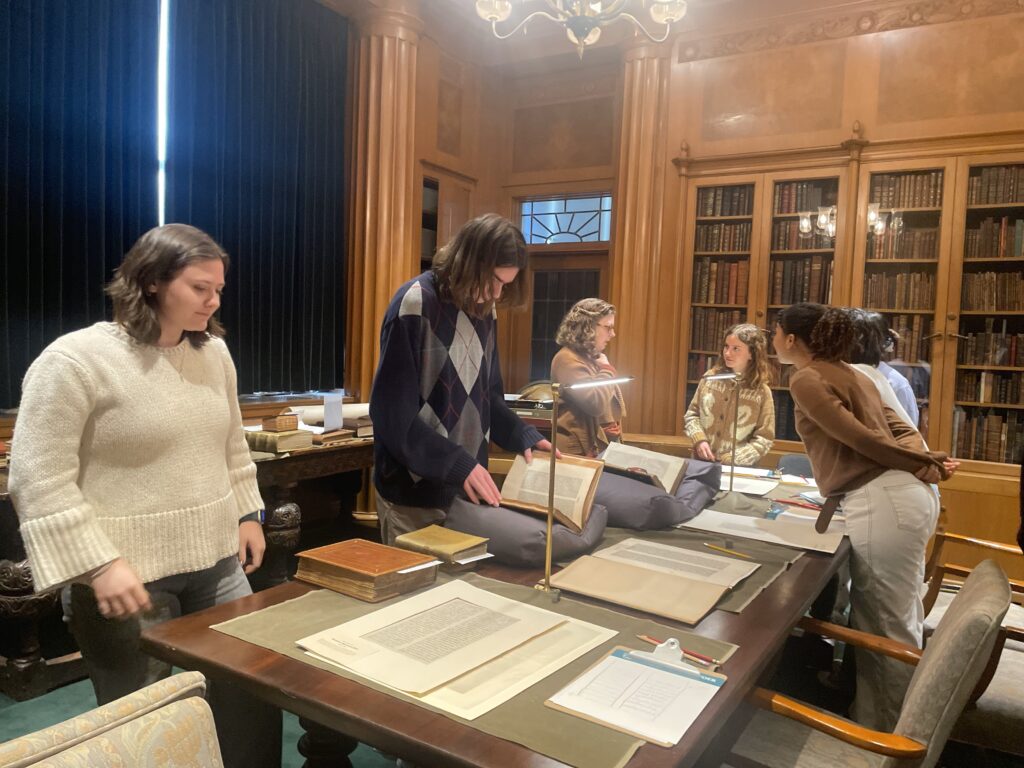
On Wednesday (Feb. 25) COL sophomores visited special collections with Professor Jarada, where Amanda Nelson (University Archivist) showed the class some reconstructions of old medieval book binding methods (done as a COL thesis project by Katherine Parks ’15). She talked about the historical turn from parchment to paper and also showed them the difference between quill and reed pens before ultimately finishing with a discussion of the printing press at the end of the middle ages—the Islamic world already had a massive infrastructure for the creation of manuscripts, and a cursive language that made the adoption of type-set printing difficult, European languages that use the Latin alphabet were much easier to print and so had a much easier time with the press.
Here’s one to bust out next time you’re with the family: In a medieval world with about one hundred different ways to store information (wax tablets, scrolls, etc.) the method of binding we now call a book was referred to as a codex!
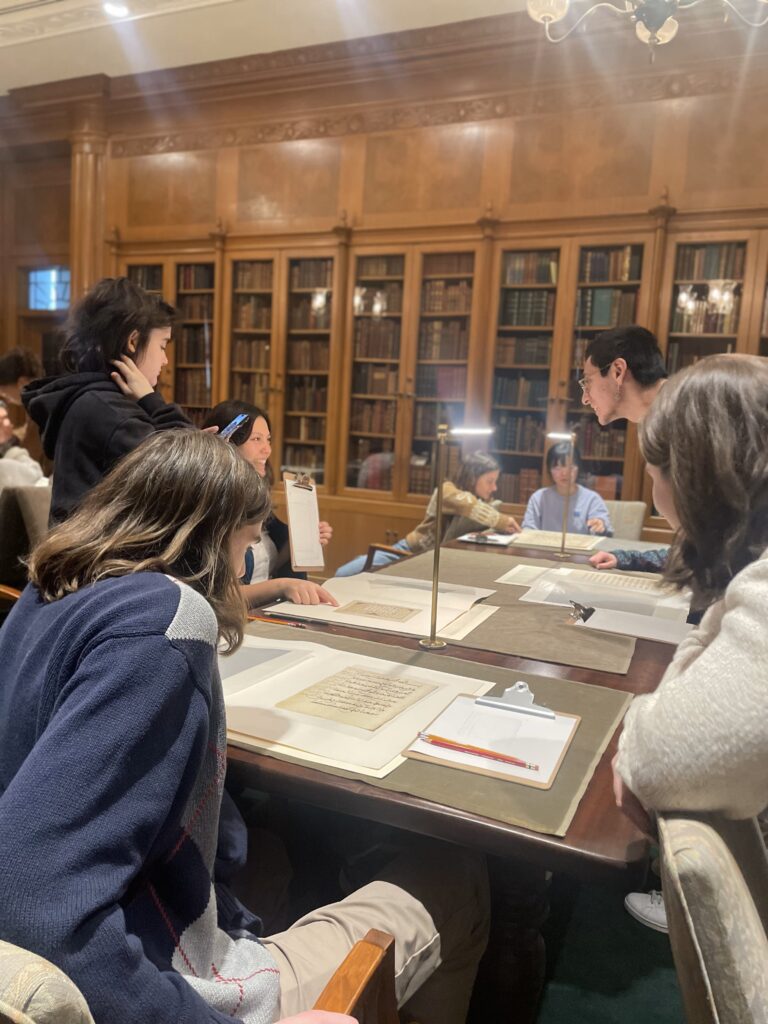
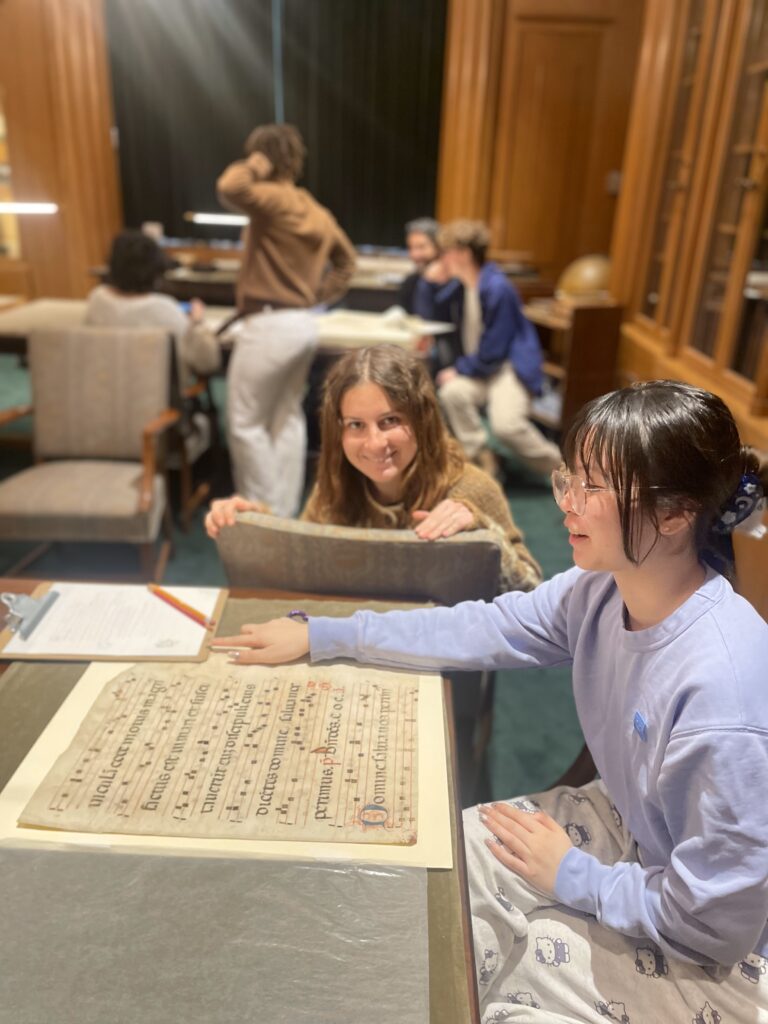
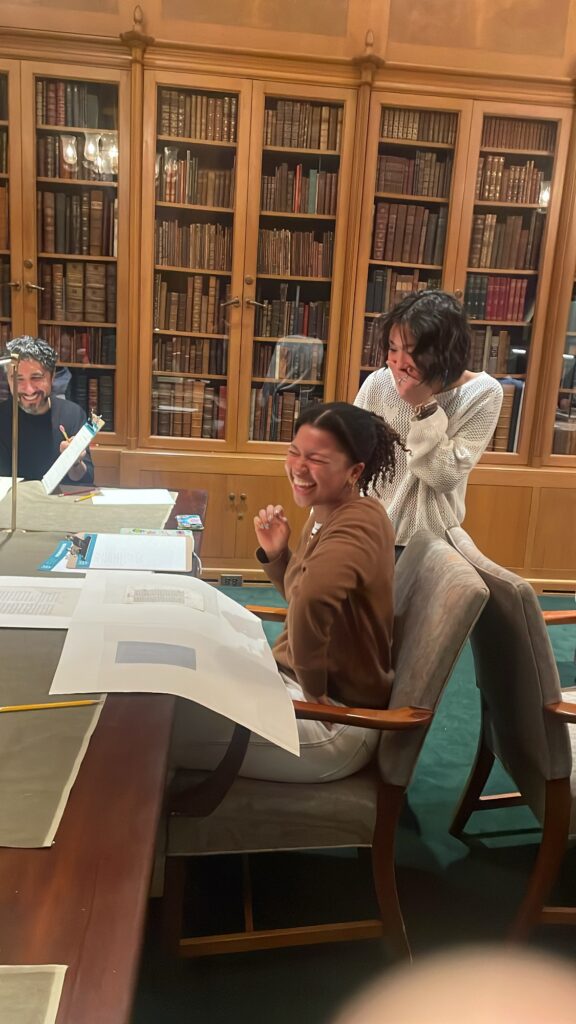
Now how difficult do you think it would be for you to replicate a page of these texts? How much harder would it be if you couldn’t see the text, if you had the images and text on the page described to you by a friend of yours? Ask a COL sophomore how difficult that could be, and they could tell you. Through this activity, they learned how much the column spacing varied from page to page, the different forms of notation, and how unique each individual hand-crafted page is.
All in all, they had a fantastic time and learned a ton!
Written by Henry Kaplan, COL Class of 2028
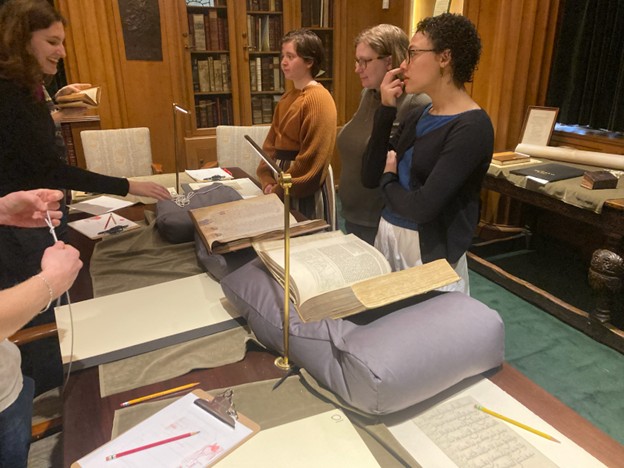
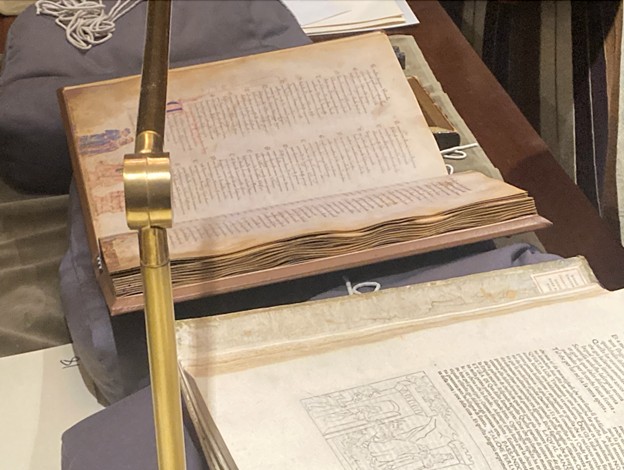
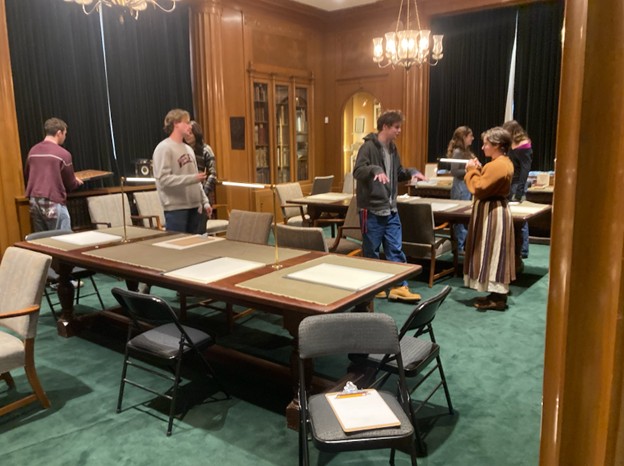
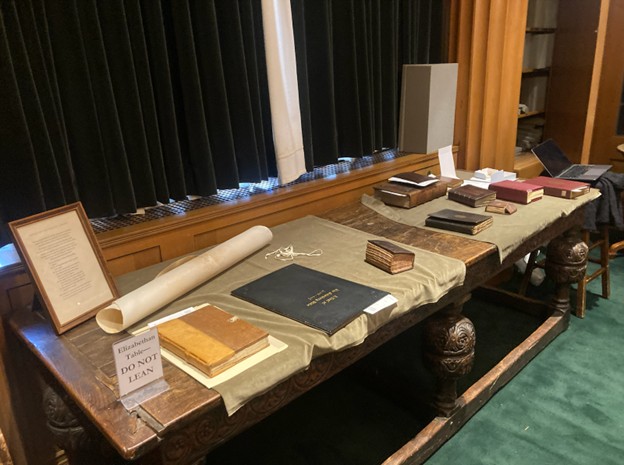
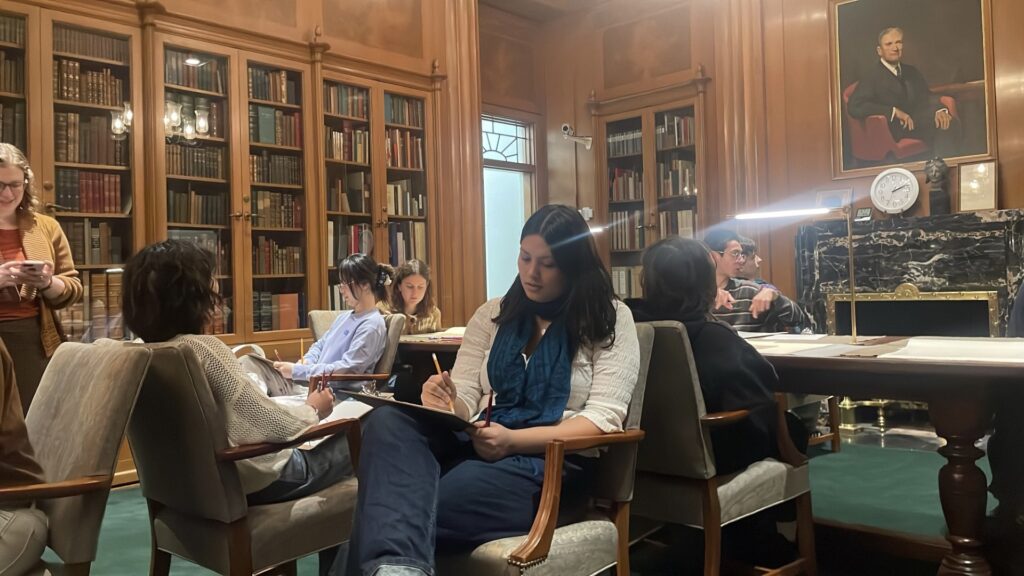
COL Sophomores do. On February 19th, COL Sophomores visited Olin’s Special Collections and Archives to view medieval manuscripts with Head of Special Collections, Tess Goodman. Students learned about manuscript-making, historical factors affecting use of parchment and paper, arrival of the printing press, and the significance of decorations, ink colours, and manuscript layout – all of which related to the texts studied in the Medieval Colloquium under Professor Hadel Jarada and Professor Tushar Irani.
By understanding the way manuscripts are made, students gained insight into multiple examples of how–when you know what to look for– centuries-old manuscripts can reveal evidence of dynamic multi-cultural inter-regional, cross-religious exchanges. Focussing only on the evidence of the ‘Abbasid era texts, students saw evidence of the Graeco-Arabic translation movement which brought East-Roman study of Aristotelian logic and philosophy, Galenic medical science, Ptolemaic geometry and astronomy, and more into the Arabic cultural sphere (and then back again in exchange with Greek scientists!).
Similarly, a text read for the Colloquium as an example of Persianate literature: ibn Al-Muqaffas’s ‘Kalilah and Dimnah’, was translated into Arabic for the ‘Abbasid caliphs as a part of a large scale turn towards Persian cultural heritage and away from the Roman. This historical context explains why the frame narrative of ‘Kalilah and Dimnah’ endows translators Barzawayh and Buzurgmihr with acknowledgement and praise for their achievement. This cultural, political movement brought knowledge and culture from regions as distant from Baghdad as India and China, allowing us to expand our concept of the COL’s cultural focus.
Students considered a range of texts from 12th century Armenian manuscripts, to 18th century editions of the Bible and the Qur’an. With quills, parchment, and paper as witness, students did an oral-drawing of manuscripts. In this exercise, one student described the manuscript in front of them, to their partner who then drew the described text to the best of their ability. This exercise instilled focus onto structural details of manuscripts: margins, line spacing, embossment, font style, column divisions– which, as Professor Jarada and Professor Irani explained, were all deliberate authorial choices that communicated information about style, genre, and textual authority.
All that said, the bell’s just rung and class is out!
By Janhavi Munde, COL Class of 2027